- About MTN
Would you like to stay up to date on the latest MTN world news? Products, graffiti, murals, festivals, art and much more.


Return Interview with Bruna Menero, Head of Operations for the Latam South, Europe and Asia Pacific area at the Briolf Group.
One of MTN’s challenges in recent years has been the development of a distribution model through its own subsidiaries in different geographical areas. The United States, Australia and Brazil are some examples, and the list continues to grow.
MTN’s integration into the Briolf Group offers significant advantages in this area. For that reason, Bruna Menero now coordinates subsidiary operations from within the group. We invite you to discover this interesting interview with Bruna, whose career is an example not only of effective internal promotion, but also of making female talent visible in a traditionally male-dominated sector.
How do you explain to your friends what you do?
It is difficult to define because the world of operations is very broad. Basically, since January I have been working on subsidiary operations in all aspects except those directly related to the sales process. That is: facilities, transport, stock, administration, customer service… all the operations required to make sales possible.
What is the main difference between working in operations at MTN and doing so for the subsidiaries?
The main difference is that subsidiaries do not have production plants, so that very complex dimension does not exist. The subsidiaries’ operations begin when the product enters through the door — storage, inventory, order preparation — and end when the product is shipped to the customer. In this sense, the operational and logistics side is quite similar.
The subsidiary model represents a side of MTN that has evolved over time. Initially, the company distributed internationally through independent distributors and gradually began opening its own subsidiaries.
How would you explain the optimization that this model brings at a global level?
Essentially, it is about reaching the market directly and having greater control. You are the one who decides how you present yourself, how you operate and, ultimately, how you approach the end customer. With intermediaries, there is a risk of losing touch with what is happening in a particular area.

Would the ideal scenario be to have subsidiaries in all countries?
Ideally, yes, always under a global strategy. Being part of a group in which different companies collaborate with each other greatly facilitates this type of expansion. However, opening a subsidiary is not easy: it requires significant investment in infrastructure and teams, as well as strong planning and management. Therefore, opening a subsidiary must be supported by a well-founded project.
You are still working for MTN, but now from the Briolf team. How would you explain it in simple terms?
The idea is that, at an operational level, the Briolf Group works in a standardized way, generating synergies between the different companies. We have teams all over the world aligned with MTN’s interests, and vice versa. Obviously, the commercial side belongs to each company, so MTN maintains its own identity. However, operationally it makes a lot of sense for Briolf to provide services to all the companies in the group, especially since several subsidiaries distribute products from more than one company.
I continue working with the same people from MTN, while also incorporating contact with subsidiaries from other group companies such as Roberlo, always from this global perspective.
What advantages does this new situation bring?
On the one hand, I contribute my logistics experience after working at the MTN HUB, which allows me to apply an efficiency-focused approach to optimize flows and warehouse operations. On the other hand, having consolidated resources in certain countries facilitates subsidiary adaptation and expansion processes.

Let’s talk about the visibility of women’s work at MTN. What is your perspective?
MTN is a company with a significant presence of women and real opportunities for growth. I joined at 23, practically just out of university, and I have been able to grow thanks to both my work and the opportunities offered to me. There are women in executive positions — our CEO is a clear example — and there is a focus on talent, not gender.
Do you see differences compared to other companies in the sector?
It is a fact that, in the sector, I am still one of the few women, particularly in operations departments. I have never experienced different treatment, although sometimes there has been some surprise at my level of expertise. Sometimes it is difficult to tell whether prejudice is related to age or gender. In any case, when you demonstrate why you are where you are, those prejudices disappear.
Do you think the chemical and industrial sectors are moving toward greater balance?
I do not know if the sector as a whole is balancing out, but at MTN, where I have grown professionally, there is clearly a commitment in this direction. It is not about quotas, but about valuing work and talent without prejudice.
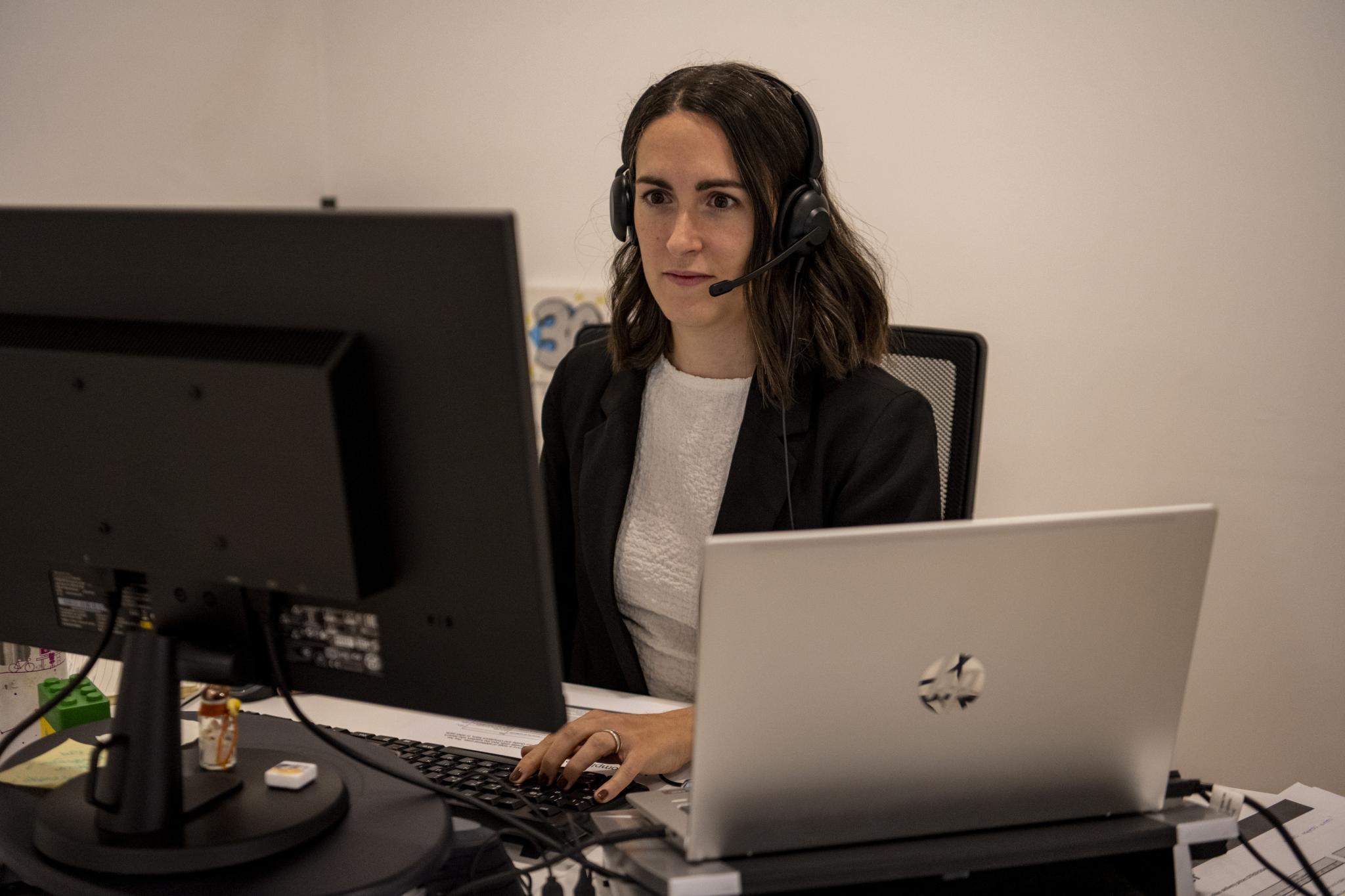
Do you think it is positive to address these issues in an interview?
Absolutely. If certain topics are not addressed, change does not happen. Highlighting role models helps move toward positive evolution.
A professional milestone that has brought you particular satisfaction.
The implementation of the SAP system in Germany. We started with the confidence that everything was properly prepared, having learned from previous experiences and with clear solutions to potential problems.
Your work is geographically dispersed. Is there a sense of loneliness?
It is true that we work a lot through screens and remotely, but we also interact frequently with local teams. Personal contact is key, which is why I visit teams whenever possible to build more human and dynamic relationships. I do not feel alone — I work with many people both locally and internationally, which enriches daily work. Although I am quite independent, in-person work still plays an important role.
How do you manage disconnection?
It is not easy due to different time zones, but it is all about balance. For example, I joined a gym to force myself to disconnect. It is important to separate personal and professional phones and plan availability with teams whenever there are no urgent matters.
ShareMay 25, 2026Categories